CULTURE / THE DAILY ORDER
When Did Coffee Become Dessert?
Banana bread matcha, cookie butter lattes and a syrup collection by the kettle. Our daily drink has developed a sweet tooth.
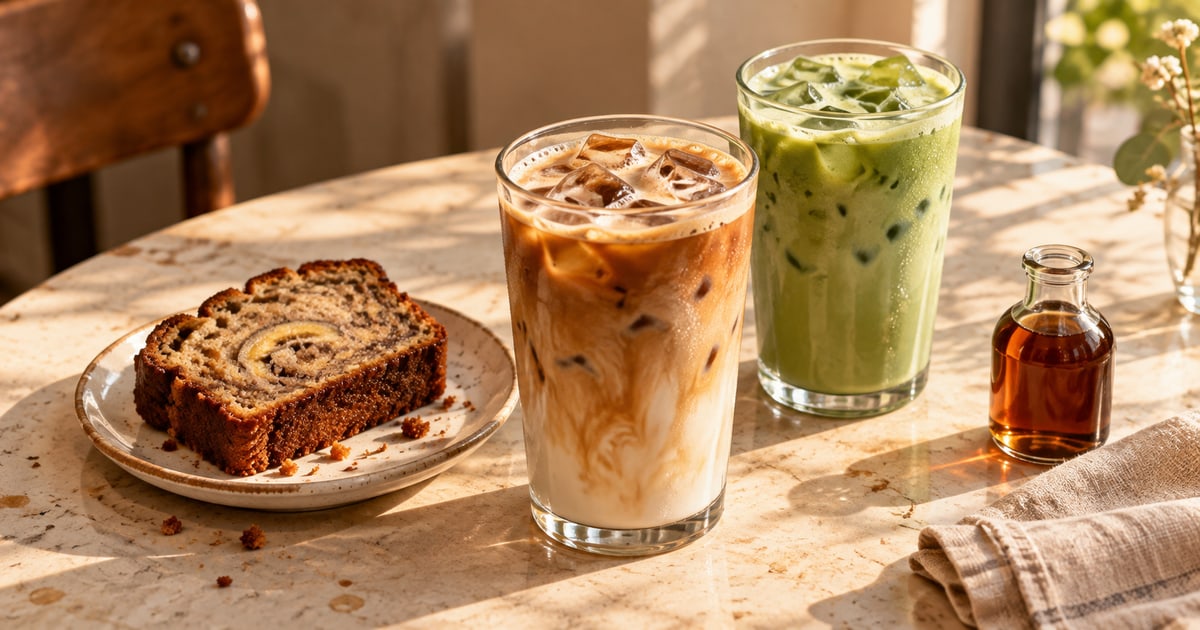
An iced banana bread matcha sounds like three separate orders that have decided to split a cup.
There’s the tea. There’s the temperature. And then, somehow, there’s a baked good. You can practically hear the person ahead of you ordering it while you reconsider your own drink. A latte suddenly feels a little underdressed.
Google’s September 30 Trends newsletter reported that US search interest in “iced banana bread matcha” was up 1,850% in 2026 so far. Matcha is tea, of course. But it has pulled up a chair at the same dessert counter as coffee, where cookie butter, pistachio and banana bread are all perfectly reasonable things to ask for in liquid form.
The question isn’t whether any of this belongs in a cup. It’s how a drink became something you could look forward to with the particular anticipation usually reserved for a very good pastry.
The bakery moved onto the drinks menu
Consider the names alone: banana bread. Cookie butter. Ube. Pistachio. Iced caramel. Those were the five trending latte flavours in Google’s US list for 2026 to date, published in that September newsletter.
They’re wonderfully specific. Banana bread suggests something warm and soft, preferably with a thick slice cut off the end. Cookie butter promises the biscuit without the crumbs. Before you’ve tasted anything, the order has already supplied a mood.
Flavoured coffee didn’t begin this September, and a list of rising searches can’t tell us exactly when the change happened. But the longer view is telling: Google reported that interest in “coffee syrups” had tripled over five years and reached its highest level yet in 2026.
Within that growing interest, there was a small changing of the guard. Searches for “banana syrup for coffee” had overtaken “brown sugar syrup for coffee” that year. Banana, apparently, had somewhere to be.
That doesn’t mean banana became America’s favourite flavour. Search interest isn’t a sales chart. It does mean people were curious enough to go looking—and that a flavour associated with a loaf on the kitchen counter had become a coffee question.
First you buy a syrup. Then you need somewhere to put it.
The most revealing part of the newsletter might be the accessories.
The newsletter also flagged rising interest in “coffee syrup set”, while searches for “coffee syrup dispenser” reached an all-time high that year. Over the preceding month, the leading trending syrup recipes were brown sugar cinnamon, vanilla and pumpkin spice.
You can picture the progression. One bottle beside the kettle. A second because someone in the house wants caramel. A little tray to make the bottles look intentional. Eventually, a pump.
Once you have a pump, you have opening hours.
There’s a lovely domestic ambition in the idea of a home café. You get to decide how sweet the drink is, which mug it goes in and whether the cinnamon is excessive. You can make a pumpkin spice syrup on a Sunday and give Monday morning something to work with.
The searches don’t tell us whether people are trying to save money, copy a café order or simply enjoy making things. Probably different people have different reasons. But looking up a recipe asks more of you than liking a picture. You’re at least considering getting a saucepan involved.
And yes, people are still putting butter in it
Among all these sweet flavours, one question takes a sharp left: “why do people put butter in their coffee”. Google said US interest in that question had more than doubled in 2026 by the time of the newsletter.
This is a separate branch of coffee customization. Butter coffee is associated with drinks such as Bulletproof Coffee, whose recipe combines coffee with butter or ghee and MCT oil. Blending the fats into the coffee produces a richer, frothy drink.
It belongs to a different conversation from cookie butter syrup, despite the confusing overlap in names. No biscuits are required. Nor does the search increase tell us that more people are drinking it; some may simply have encountered the idea and needed an explanation.
An understandable response to finding the butter dish involved in your morning brew.
Your coffee order, unfairly psychoanalysed
You are allowed to be several of these people before lunch.
Black coffee: You said “just a coffee” and would like credit for keeping this transaction under twelve seconds.
Cold brew: You have three projects underway. This drink is project management.
Cortado: You know which café has the good cups. You haven’t told everyone yet.
Flat white: You have a preferred milk texture and were hoping someone would ask.
Latte: You came for caffeine, but a small heart in the foam does improve things.
Iced banana bread matcha: You read the seasonal menu all the way to the bottom. Someone has to keep this place interesting.
Let the drink be a little ridiculous
There’s an easy version of this story that ends by scolding everyone for ordering something elaborate. It would be a boring ending.
You don’t need to defend liking pistachio. A drink can be sweet, fussy, familiar or different from what you had yesterday. It can be a reason to leave the house, or a reason to spend ten minutes making something at home before opening your laptop.
Maybe coffee didn’t become dessert so much as inherit one of dessert’s jobs: giving an otherwise ordinary day something to look forward to.
And if the order sounds a little like a slice of banana bread with a straw in it, there are worse ways to spend a coffee break.
While your coffee cools, play today’s PopLine: a daily game of putting familiar pop-culture moments in order. No signup, just a few decisions about what came first.
Read next: These 6 Pop Culture Moments Happened in the Same Year. Somehow.
Sources
Search figures and flavour rankings: Google Trends’ “Is it Coffee or Dessert? • Your Coffee Personality” newsletter, September 30, 2026. Figures reflect US search interest over the periods described, rather than sales; 2026 figures run up to the newsletter’s publication date.